
Influenza Course
Influenza Course - Bird flu, also called avian flu and h5n1, is a type a influenza. This course will teach you simple steps to take to protect yourself and residents from getting or spreading the flu. We fund influenza vaccine research by the year or two year time. Recall how pandemic influenza occurs. Free video course and quiz. The cumulative incidence of influenza was similar for the vaccinated and unvaccinated states early, but over the course of the study the cumulative incidence of influenza increased more rapidly. Understanding the stages of the flu—including the signs and symptoms that are likely to develop—can help you determine if you are recovering as you should. Constant mutation of the virus results in new strains and widespread reinfections across the globe, bringing great challenges to disease prevention and control. Influenza b viruses, however, typically change more slowly than influenza a and only infect humans. Identify the clinical issues related to avian influenza. Understand influenza past to present. Influenza type c differs from types a and b in some important ways. 8,9 to improve influenza peak period forecasts, training data may need to include. Free video course and quiz. Watch free webinars from the red book online influenza video series to learn more about preparing and planning for the influenza season. Dive into the world of influenza, exploring its types, transmission, mutation, symptoms, and treatments. Describe the clinical issues related to h1n1 (swine flu). Staying away from others when they are ill) or wearing a mask if unable to isolate. Results among 53402 employees, 43857 (82.1%) had received the influenza vaccine by the end of the study. We fund influenza vaccine research by the year or two year time. Constant mutation of the virus results in new strains and widespread reinfections across the globe, bringing great challenges to disease prevention and control. Influenza type c differs from types a and b in some important ways. Dive into the world of influenza, exploring its types, transmission, mutation, symptoms, and treatments. Reproducible patient education materials will be included. Flu is a. And of course, cows are on farms with other mammals, like pigs, that have been known to spread viruses to humans in the past. Flu symptoms progress through four different stages, from incubation to recovery. Describe the clinical issues related to h1n1 (swine flu). Describe the types of influenza and how influenza changes over time. Staying away from others when. Bird flu, also called avian flu and h5n1, is a type a influenza. Influenza viruses are divided into three types, designated a, b, and c. Dive into the world of influenza, exploring its types, transmission, mutation, symptoms, and treatments. Influenza b viruses, however, typically change more slowly than influenza a and only infect humans. Background the influenza virus (iv) is. 8,9 to improve influenza peak period forecasts, training data may need to include. Flu symptoms progress through four different stages, from incubation to recovery. Gain insights on flu complications, prevention strategies, and vaccine effectiveness for informed health decisions. Covers important new updates for the respiratory virus season for best patient outcomes. Reproducible patient education materials will be included. Type a influenza is a more severe form of flu that can infect humans, birds and other animals. Care delivery and reimbursement methods start date: Nationwide, nearly one in three influenza tests are coming back positive, almost 32%, compared to the peak of last flu season which was less than one in five tests or about 18%. Influenza viruses are. It will teach you about prevention, symptoms, and treatment strategies. Get an introduction to the biology, epidemiology and evolution of the influenza virus in this free online course. Covers important new updates for the respiratory virus season for best patient outcomes. Care delivery and reimbursement methods start date: Nursing ceus / influenza in this course, you will learn about the. Bird flu, also called avian flu and h5n1, is a type a influenza. Covers important new updates for the respiratory virus season for best patient outcomes. Influenza b viruses, however, typically change more slowly than influenza a and only infect humans. This course presents how pandemic influenza occurs, the essential elements of a pandemic influenza plan, and best practices for. Influenza types a and b are responsible for epidemics of respiratory illness that occur almost every winter and are often associated with increased rates for hospitalization and death. Staying away from others when they are ill) or wearing a mask if unable to isolate. Influenza occurred in 1079 (2.02%) during the study. Influenza type c differs from types a and. Influenza type c differs from types a and b in some important ways. We fund influenza vaccine research by the year or two year time. The cumulative incidence of influenza was similar for the vaccinated and unvaccinated states early, but over the course of the study the cumulative incidence of influenza increased more rapidly. Describe the clinical issues related to. Identify the clinical issues related to avian influenza. Influenza b viruses, however, typically change more slowly than influenza a and only infect humans. Reproducible patient education materials will be included. Influenza viruses are divided into three types, designated a, b, and c. Since 1918, our understanding of the influenza virus has come a long way. Watch free webinars from the red book online influenza video series to learn more about preparing and planning for the influenza season. Recall how pandemic influenza occurs. Constant mutation of the virus results in new strains and widespread reinfections across the globe, bringing great challenges to disease prevention and control. Flu comes in types a, b, c and d. Reproducible patient education materials will be included. Influenza types a and b are responsible for epidemics of respiratory illness that occur almost every winter and are often associated with increased rates for hospitalization and death. Understand influenza past to present. Get an introduction to the biology, epidemiology and evolution of the influenza virus in this free online course. Dive into the world of influenza, exploring its types, transmission, mutation, symptoms, and treatments. Flu is a viral infection that will resolve on its own after running its full course, but you can use the following medical interventions to shorten the flu cycle or prevent the flu infection altogether. Nationwide, nearly one in three influenza tests are coming back positive, almost 32%, compared to the peak of last flu season which was less than one in five tests or about 18%. Nursing ceus / influenza in this course, you will learn about the red flags and symptoms of serious illness related to seasonal influenza, and about the importance of early treatment per cdc guidelines. Describe the types of influenza and how influenza changes over time. Influenza b viruses, however, typically change more slowly than influenza a and only infect humans. 8,9 to improve influenza peak period forecasts, training data may need to include. It can also help you figure out if you are still contagious and able to infect others.
Influenza Nursing CE Course for RNs and LPNs NursingCE
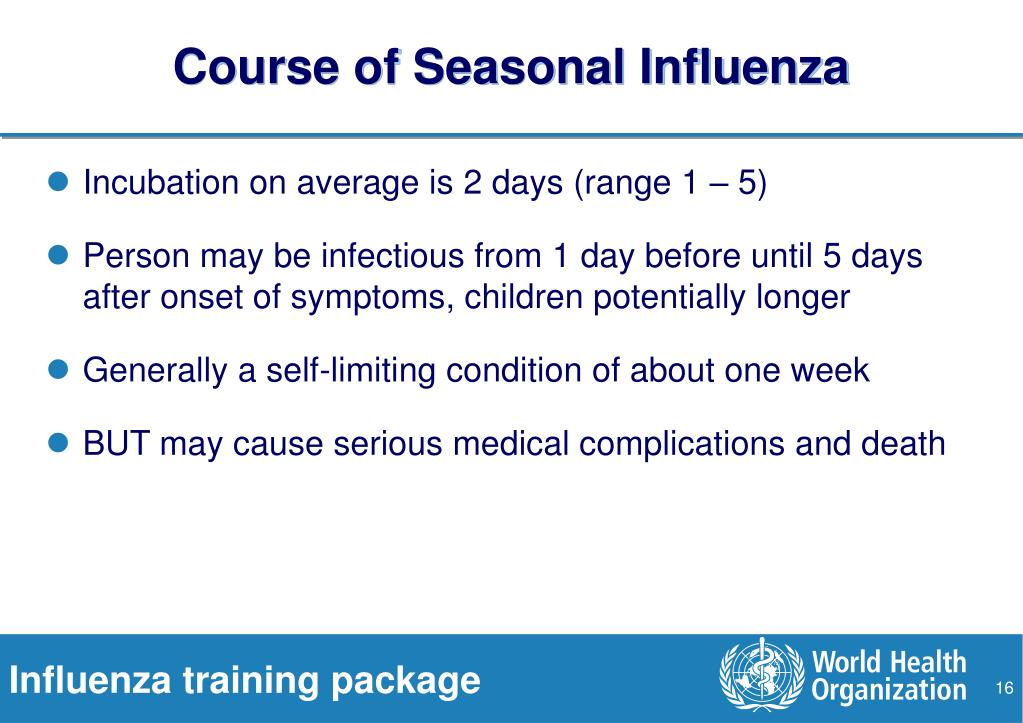
PPT General Issues of Influenza PowerPoint Presentation, free

Influenza for RNs and LPNs Signs, Symptoms, Treatment, and Prevention

Free Course Seasonal influenza Introduction from OpenWHO Class Central
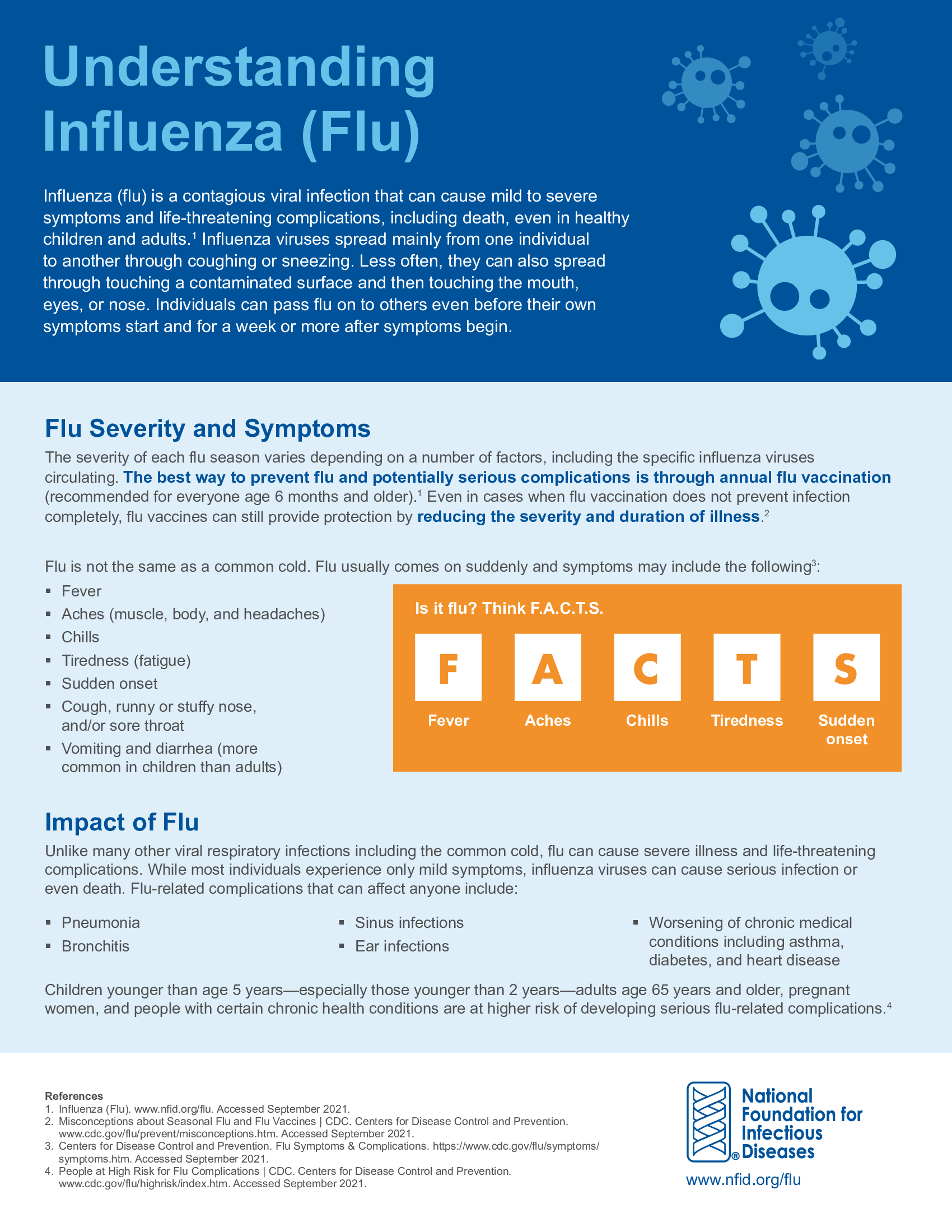
Factsheet Understanding Influenza and Encouraging Flu Vaccination

2020 National Survey Attitudes about Influenza, Pneumococcal Disease
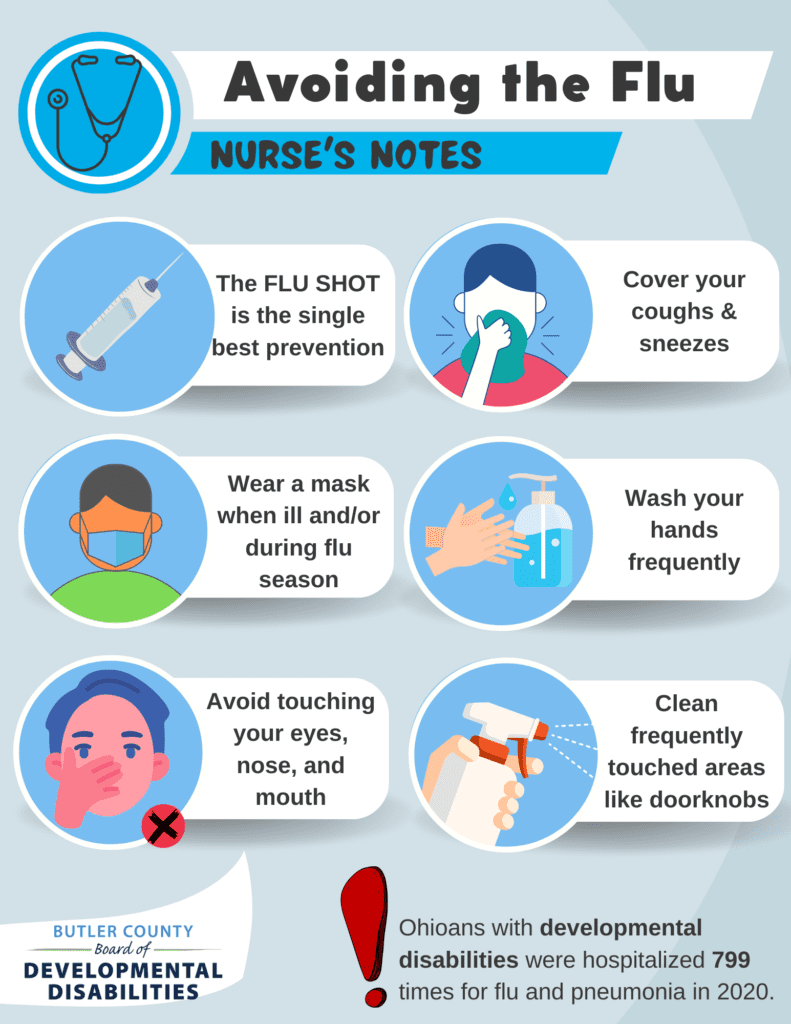
Butler County Nurse's Notes Avoiding the Flu Butler County

Face to face flu training 2024/25 + immunisation update
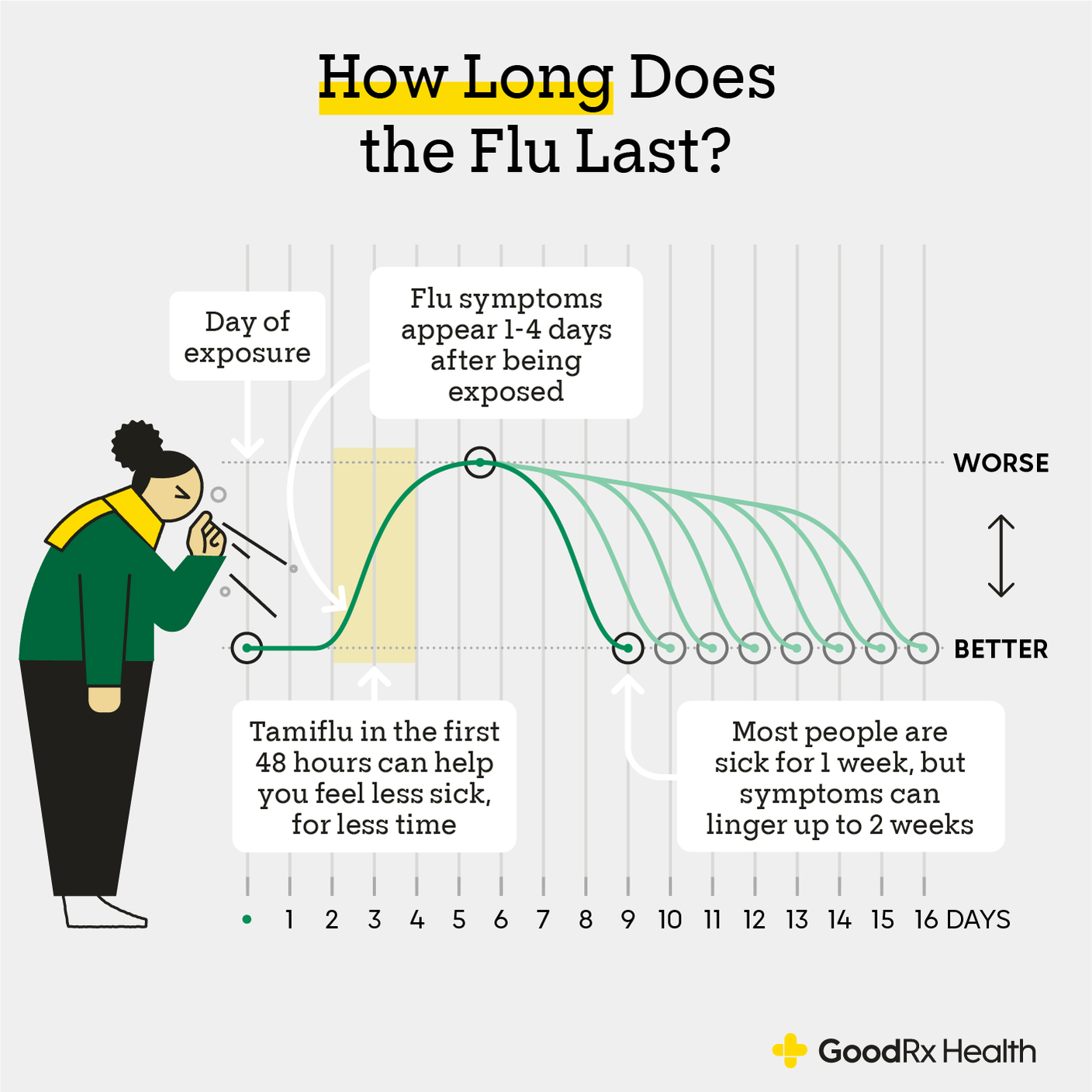
The Stages of the Flu Timeline and Recovery GoodRx

Free Course Pandemic influenza Introduction from OpenWHO Class Central
Identify The Clinical Issues Related To Avian Influenza.
View A Typical Flu Timeline And Get Tips For A Quicker Recovery, Here.
We Fund Influenza Vaccine Research By The Year Or Two Year Time.
And Of Course, Cows Are On Farms With Other Mammals, Like Pigs, That Have Been Known To Spread Viruses To Humans In The Past.
Related Post: